

Over the years I have tried many different types of self-sufficiency crafts, whether this be home brewing, beekeeping, grow your own or butchery. I have done a bit of curing now and then too, my homemade chorizo didn’t give me botulism. The proscutio was edible, the salt beef was rather good but the pastrami still needs a bit of work. My least successful attempts have been at homemade bacon, although in my defence they were my earliest.
So in the spirit of practice makes perfect I had another go.
Let’s Talk About Meat
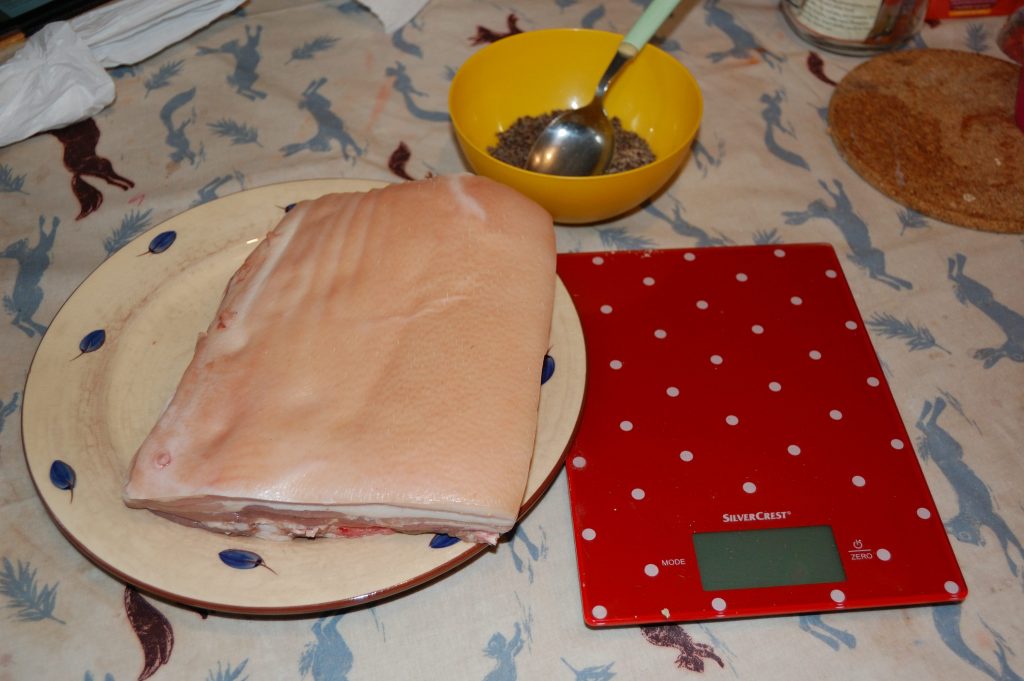
First things first, the pork. I have for the last few years increasingly used The Black and White Pig Company as my main source of meat. Getting to know your butcher and trying different cuts of their meat has been a great enjoyment. So they were obviously the first people I turned to for my key homemade bacon ingredient, the pork. In the UK we tend to make our bacon from either, loin which makes back bacon, or belly which makes streaky. Others like collar, shoulder and middle are less seen these days. Because I wanted an nice fatty cut with lots of flavour I went for belly pork to make streaky.
The Homemade Bacon Recipe
Making homemade bacon is simple, in principle. In practice like many crafts there is a bit more too it. My first attempts many years ago were based on Hugh Fearnley Whittingstall recipes from the River Cottage Meat Book, which is excellent in most regards. However, I tried his home cured bacon recipe and found it very salty, no doubt in part to my own ignorance. Since then I have made other cured products, often based on recipes in Charcuterie by Michael Ruhlman and Brian Polcyn. This is an excellent resource and, although American covers, the subject in great detail. It was invaluable to me when taking my first steps in curing. In the end I did some research at Sausagemaking.org which ultimately led me to this Bacon Calculator at localfoodheroes.co.uk.
Using the calculator I ended up with the following cure for my 1,500gm of belly pork;
- 33g salt
- 12gm of sugar (brown)
- 3.75gm of Cure #1
Now I’m not going to try and teach people about curing here but, suffice to say when the using sodium nitrite and sodium nitrate products Cure#1 and Cure#2, follow a recipe! They are toxic ingredients that need to be used in the correct proportions. They add to both the safety and finish of cured products and I have always been happy to use them. But there is a school of thought that frowns on them.
With regards to the recipe I didn’t make any flavour changes other than brown sugar for white. Different herbs and spices can be added but at this time I was just aiming to get the process right.
Technique
It feels a little grandiose to describe this as ‘technique’. It is after all quite simple provided you have the correct recipe and tools.
I simply placed the clean and dry belly of pork in a vacuum bag. Added all of my pre-measured cure ingredients. Shook it around a little to try and even up the coating. Then sealed with my vacuum sealer.
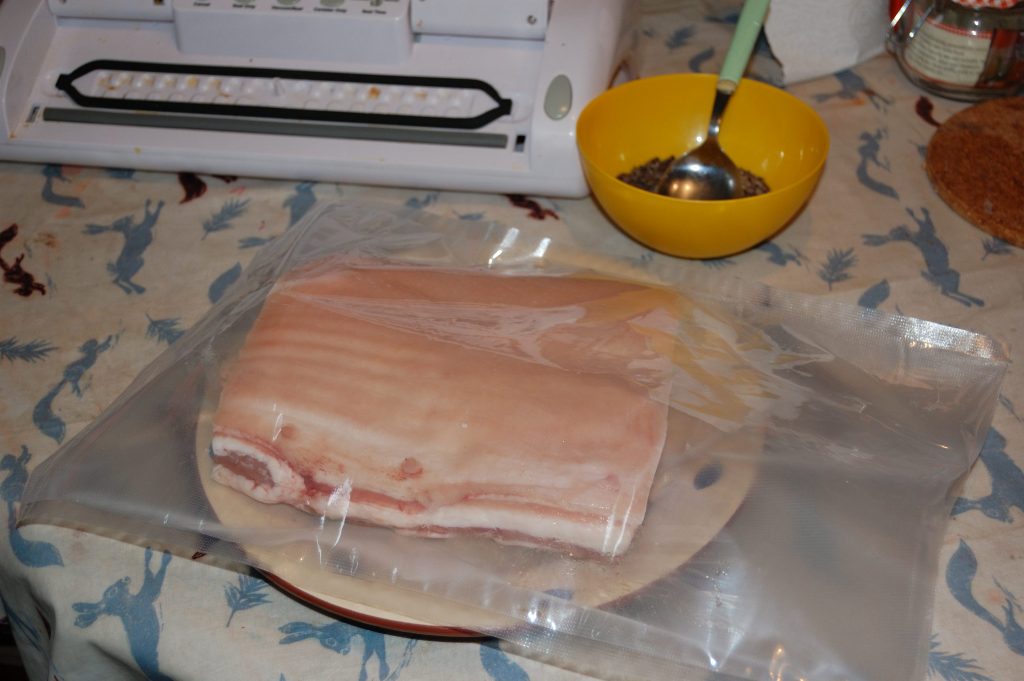
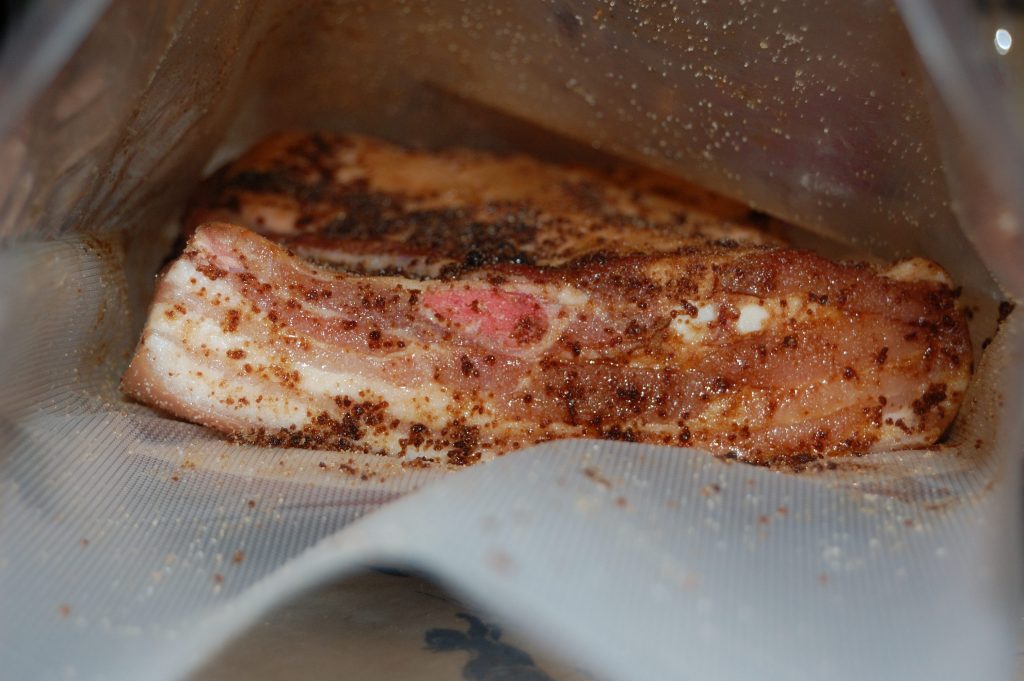
As you can see it’s all self-contained and ready to go.

This method is often described as a halfway house between dry cure and brining. The meat isn’t submerged in brine but the juices are trapped around the meat. The meat is coated in a dry cure but this is not an excess cure method as used in some dry cure methods ( without Cure#1). In those methods the available salt far exceeds the required amount to cure the meat and the juices are allowed run off. Instead, in this method the mass of salt is calculated in proportion to the mass of the meat in order for an equilibrium to form.
I cured the meat for 8 days in the vacuum bag in the fridge turning the bacon daily, with a little massaging to make sure the cure got everywhere it needed to. At the end of the 8 days I removed the bacon for testing.
The Final Product
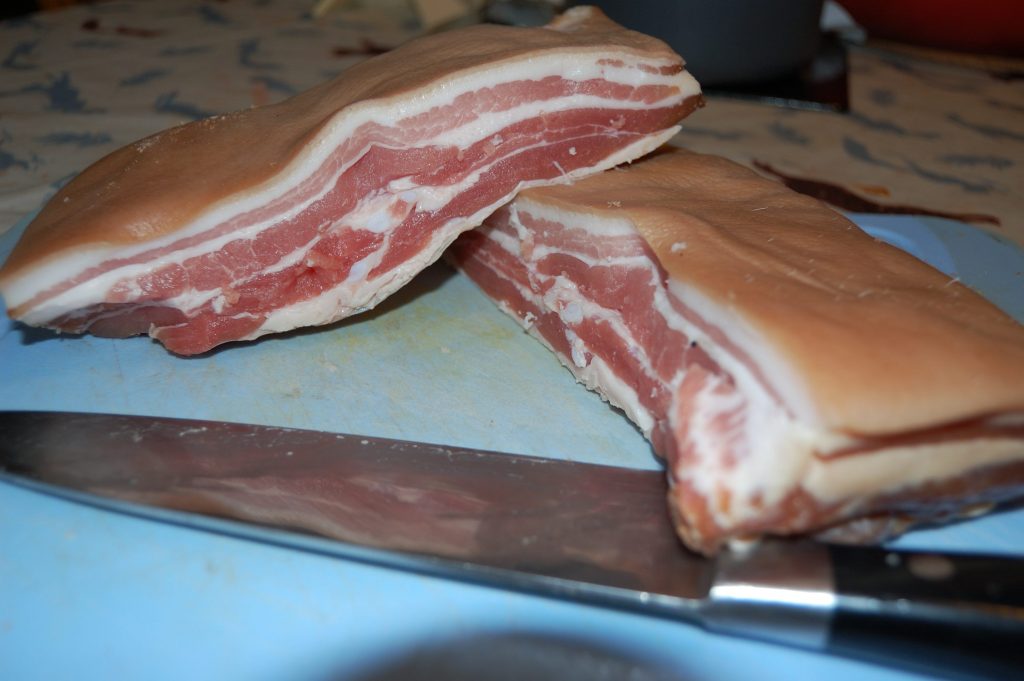
When it came out of the bag the bacon was noticeably darker from the effect brown sugar and noticebly firmer from the curing process. After an aborted effort to slice the meat with my knife I got the sharpener out and rehoned the edges. Then tried again, one wonky slice and two decent slices.
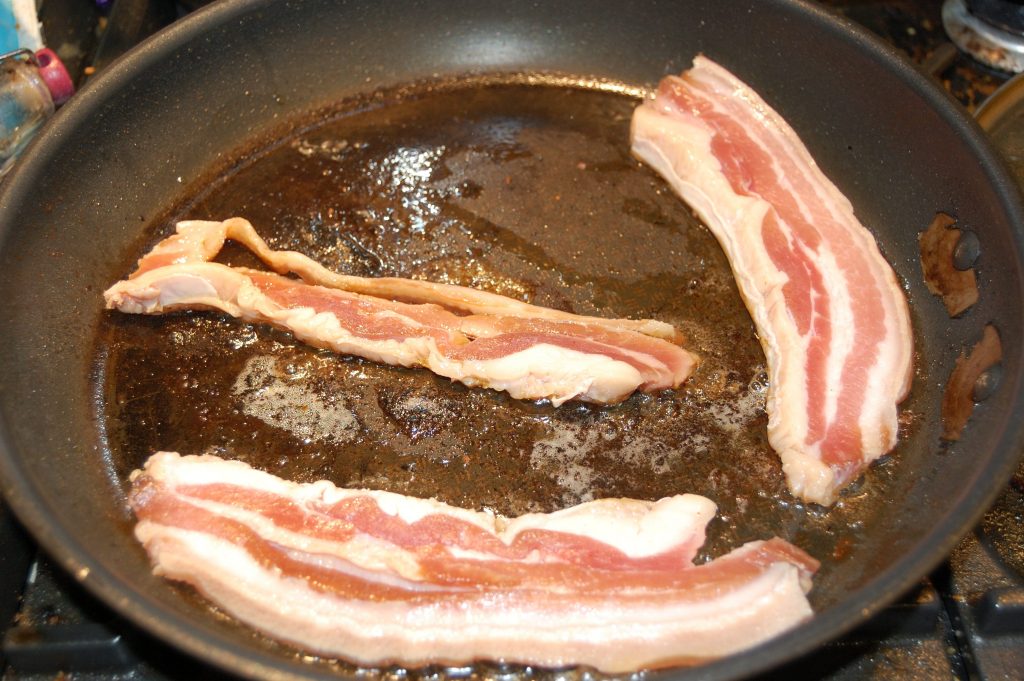
Into the frying pan it went. Low to medium heat with a little bacon fat.
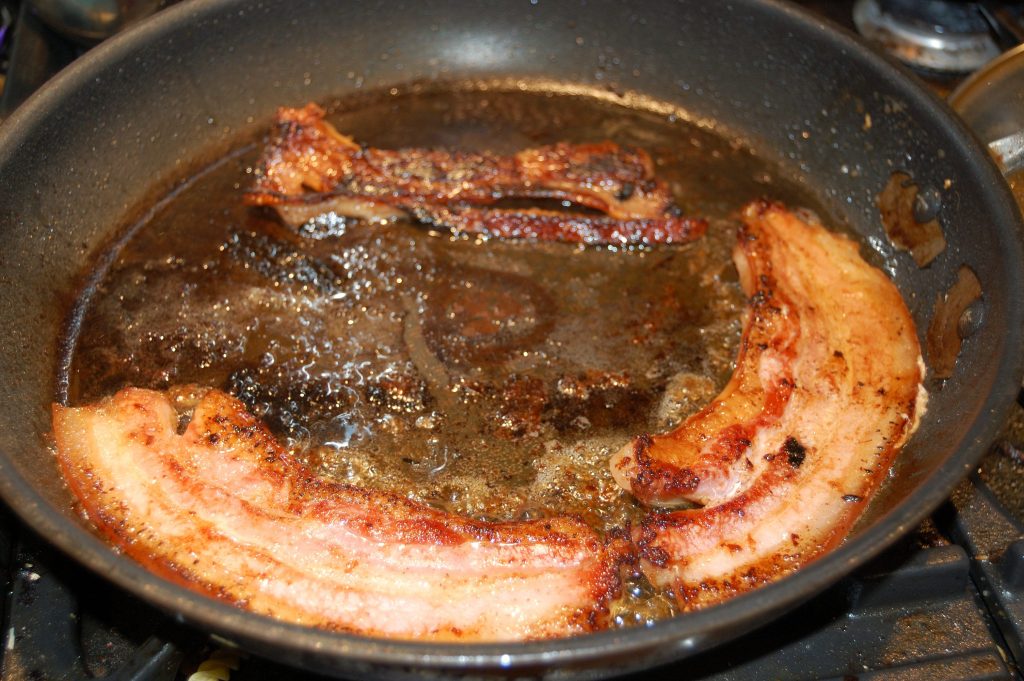
Given the slices were quite thick (say 2-3mm) and that there was a healthy amount of fat and rind, I chose to cook the bacon slowly. Lots of fat rendered out of the slices. The rind crisped up nicely and the meat took on a nice brown crisp hue, no doubt aided by the sugar. When it was cooked EmmCee and I tried the runty outer slice and I made a homemade bacon sandwich from the two decent slices.
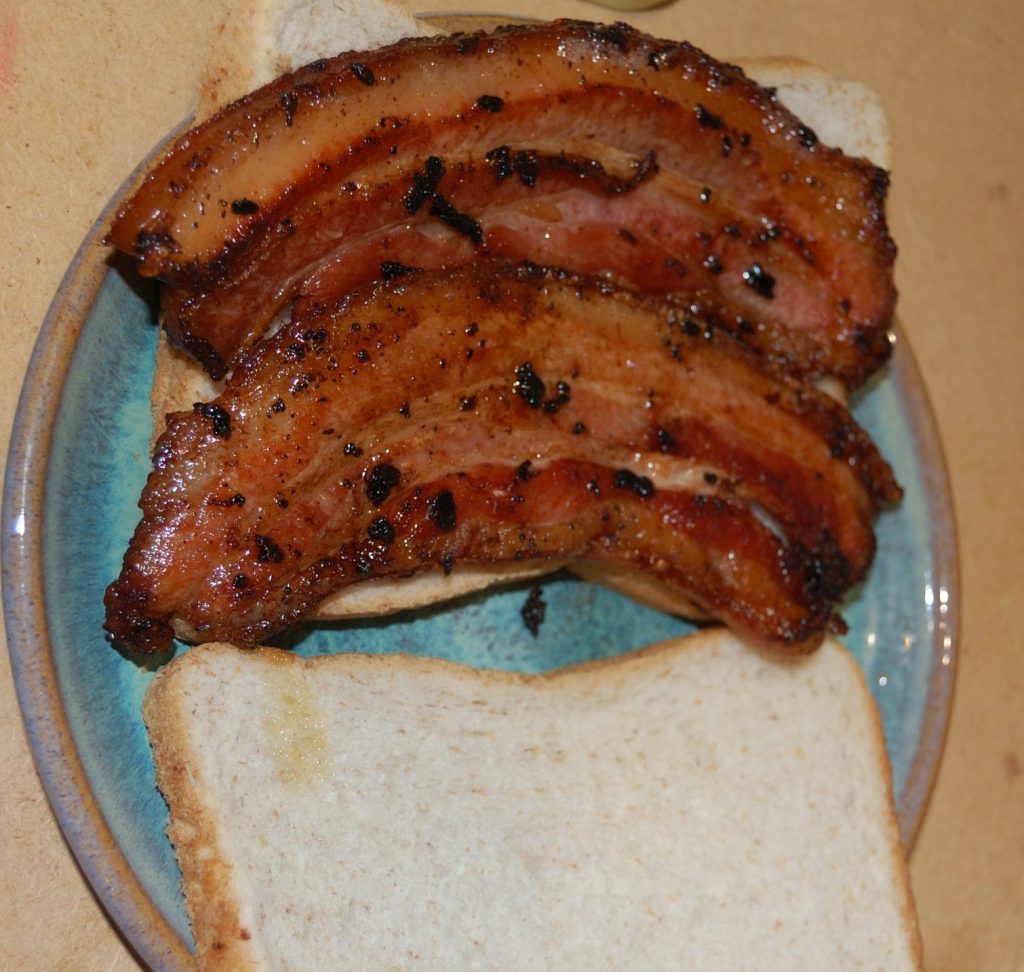
Testing the Homemade Bacon, the best it surely.
The final product was very good. I’m not going to tell you it was the best bacon I have ever tasted. I might be a little big headed now and again but I’ll try and keep some proportion. The bacon was little salty but in no way too salty. The texture and taste were good, and it had that “real butchers bacon” kind of quality. When compared to some anaemic looking supermarket offerings, it was nice having some fat and rind on the bacon. The thick slices gave it some real texture and you could really taste the meat. Suffice it to say I am routinely given or buy worse bacon than this and it comfortably sits towards the better end of bacon I’ve ever had. As far as experiments go, my homemade bacon was a success.
Next I’m going to try smoking some homemade bacon.
You’ll find more of my cooking posts here.